The Humble Paperclip
The Significance of a Symbol
“A symbol is not just an image, but it is like a door into the inner world of the soul.”
Llewellyn Vaughn-Lee
Symbols act as a universal shorthand that transcends language barriers, speeds our comprehension and fosters a shared understanding. They provide a sense of connection and shared understanding within a community. They connect us to memories, traditions and our heritage, strengthening our sense of identity and belonging.
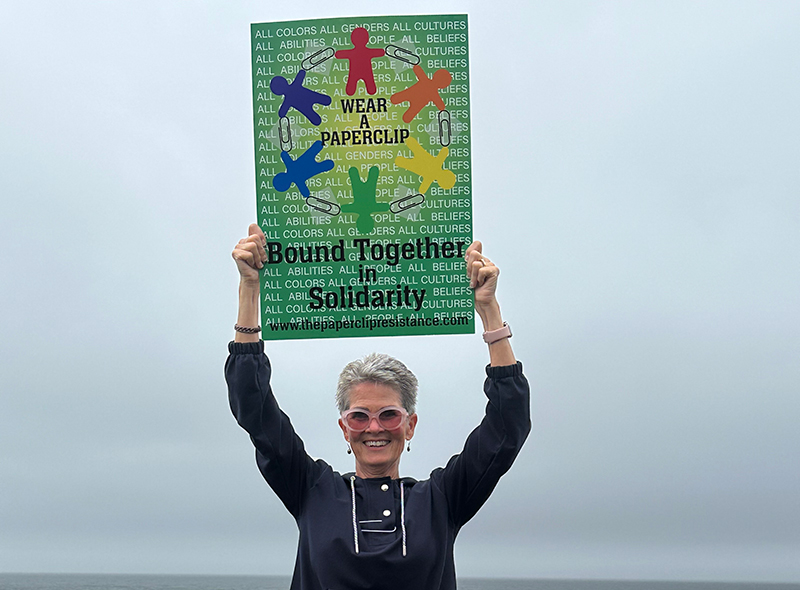
Symbols help us make sense of our surroundings, providing a mental shortcut that triggers recognition, understanding and feeling. The paperclip unites us as a group without saying a word. It connects us in a way that words never can. Symbols have the power to unite or divide us. The paperclip serves to unite us by signaling to others that we are unified in our desire for a world of inclusiveness, freedom, acceptance, and justice for ALL.

The paperclip became a national symbol of resistance in Norway during WW2 and was worn as a silent form of protest, against the German occupation of their country. Germans attempted to strip away Norway’s culture and replace it with Nazi ideals. Norway’s teachers were told to join the Nazi Party and teach Nazism in the classroom, and the church was told to teach “obedience to the leader and the state.”
It was in the autumn of 1940 where students at Oslo University started wearing paperclips on the lapels as a non-violent symbol of resistance for unity and national pride. The symbol of the paperclip was so simple in nature with widespread availability, allowing it to spread throughout the population of Norway and making it a powerful collective statement.
Every bishop in Norway resigned along with 90% of the clergy. Around 40,000 Norwegians were imprisoned and over 10,000 lost their lives. Norway had one of the strongest Nazi resistances on the entire European continent and the strongest contingent were the teachers and students.
The people had to deal with German soldiers day in and day out for 5 years. By 1945 some 400,000 German troops were operating in Norway, controlling a population of about 4 million.
Teachers were rounded up, put in concentration camps, starved and marched through darkness, crawling in the snow, forced to perform hard labor while being beaten and tortured. Despite their tremendous suffering, they banded together with their fellow citizens, continuing to resist until the end of the war. It goes to show how much we can hold when we stay together, sort of like the paperclip.
When interviewed, one of those brave teachers, who suffered and witnessed endless torture, was asked, “Why didn’t you give in?” His response was, “Because I am Norwegian.”
The Nazis soon caught on to its significance and eventually banned its use, which demonstrates its effectiveness as a tool of protest.
“Of Norwegian Ways,” by Bent Vanberg wrote, “Loyal Norwegians wore the paperclips proudly knowing well that they risked arrest, deportation, imprisonment and even executions by displaying this simple sign of their true feelings.”
As FDR once said in his famous speech, “look to Norway”:
“… and if there is anyone who doubts the democratic will to win, again I say, let him look to Norway.”
The United States of America belongs to “We the People.” Our country has been taken over by an authoritarian government from within. It is time for the revival of the most powerful symbol ever to be used against tyranny, the humble paperclip.
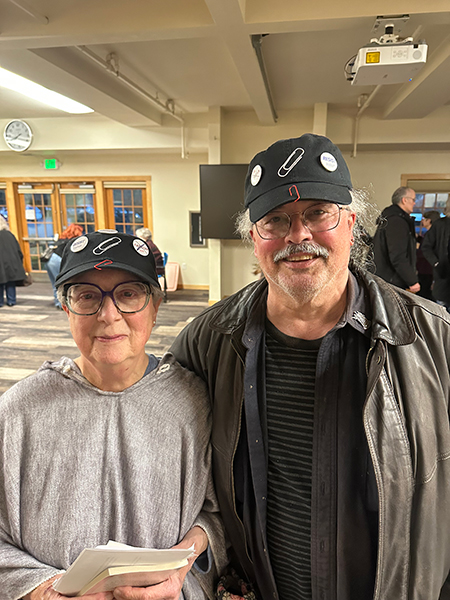
Join us in binding ourselves together in solidarity and wear the paperclip proudly each and every day, to signal to the world, that we will never give up our fight for democracy. When asked in the future why you didn’t give in to this insanity, you can proudly say,
“Because I am American!”